

Paver patios and hardscaping in Orangeburg, NY
Patios, front walks, driveways, and retaining walls for Orangeburg homes, planned around Orangetown's rules and built by MDK, whose owner works on the job sites himself.
Rockland County License H-12382(A6)
|
Insured
|
Licensed H-12382(A6)
|
CMHA Certified Paver Installer
|
Rockland County Professional Landscapers Association
| Insured | Licensed H-12382(A6) | CMHA Certified Paver Installer | Rockland County Professional Landscapers Association
Orangeburg homes, Orangetown rules

Orangeburg is one of the Orangetown hamlets, which matters more for hardscape than most homeowners expect. Orangetown lists retaining walls among the projects that need a building permit, so a patio with a wall on it needs a permit conversation from the very start. Getting that right before the proposal is signed saves a stop-work surprise halfway through the job.
Much of Orangeburg's housing arrived with the postwar building boom, when developers brought modern suburban houses to young families. From the side streets off Orangeburg Road and Route 303 to the blocks near Veterans Memorial Park, those houses are now old enough that their original concrete has had its run. Front walks crack at the joints, the step at the front door pulls away from the house, and the small patio poured at the back slider sinks at one corner. For an Orangeburg homeowner, a paver project is often less about adding something new and more about replacing the original hardscape with work that will outlast the next owner.
What MDK builds in Orangeburg
-

Paver Patios
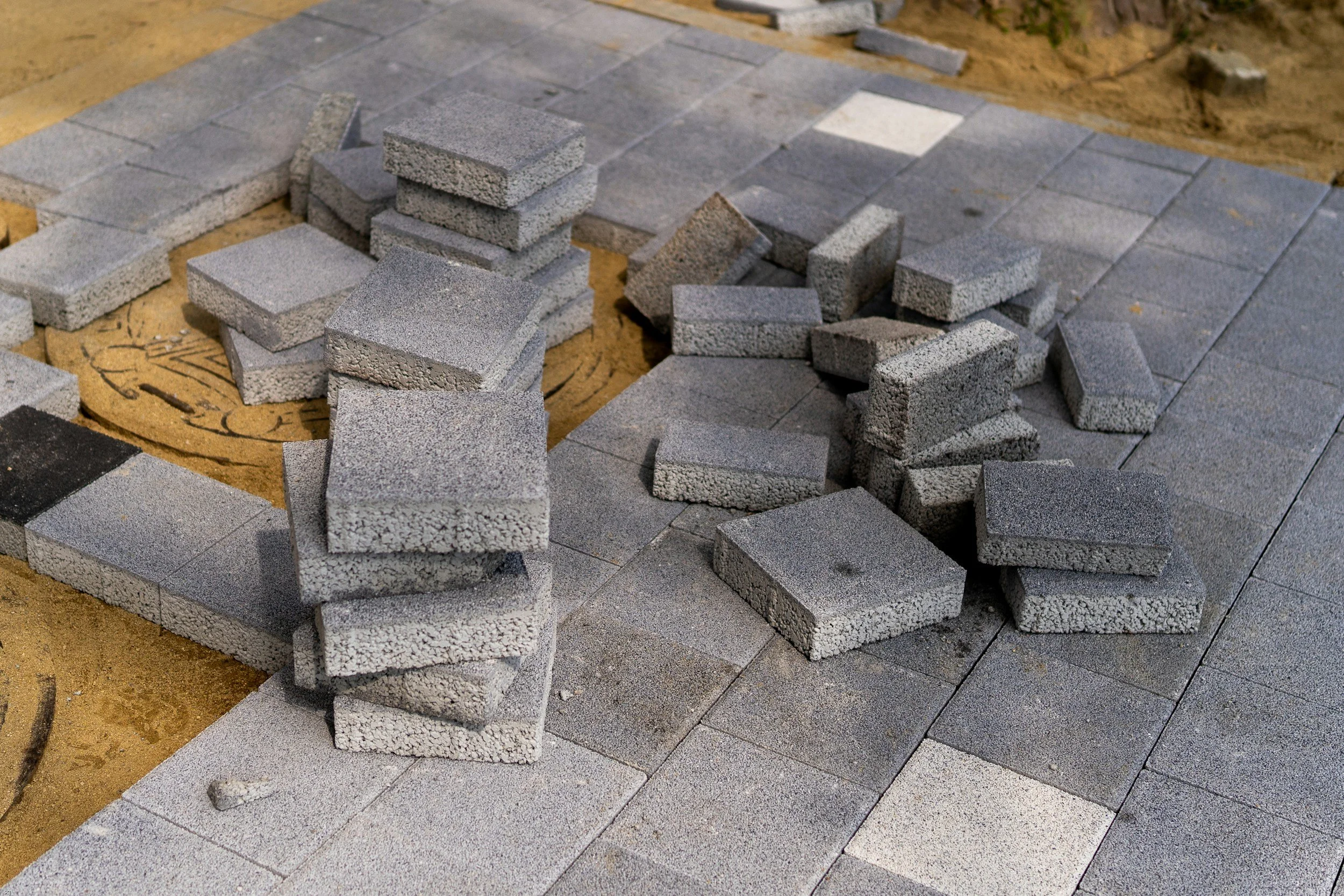
A patio is the paver job with the most choices: shape, size, color, pattern, and border. Marking out the footprint on site before digging lets the homeowner see the patio against the house and the yard. The base is sized to the soil and the use, whether that is a dining table, a grill, or a sitting area.
-

Walkways
A walkway takes the most foot traffic of anything on the property, including in winter when it gets shoveled and salted. MDK builds walkways wide enough for two people side by side where the space allows, pitched so water runs off instead of freezing on the surface, and edged so the pavers stay in line.
-

Driveways
A paver driveway carries the weight of cars and, in winter, a plow. That takes a deeper base than a patio and tighter compaction. MDK removes the old surface, builds the base for vehicle loads, and sets the pavers in a pattern suited to turning tires. A cracked paver can be lifted out and replaced without cutting the whole driveway.
-

Retaining Walls
Many Rockland yards slope. A retaining wall turns that slope into level ground for a patio, a lawn, or planting beds. The wall needs a compacted footing, drainage behind it, and gravel backfill so water does not push it over time. Taller walls can involve permits and engineering, and MDK covers that on the site visit.
-

Steps and Landings
Steps connect a patio to a back door, a deck, or a lower part of the yard. Each step needs the same rise so nobody trips, and a landing at the top that is deep enough to open a door without stepping back. Steps are built from wall block or solid caps set on a compacted base.
Permits and planning in Orangeburg
Retaining walls.
The Town of Orangetown's building office lists retaining walls as work that needs a building permit, and says some fences and freestanding walls do too. A seat wall or a wall holding back a grade change should be treated as permitted work until the town says otherwise. MDK can file for the Orangetown permit on the homeowner's behalf.
Patios and walks.
Orangetown's permit list does not name patios, walkways, or driveways. That is not the same as saying none are ever needed, so MDK recommends a quick call to the Orangetown building office about the specific project. The town's own guidance is to call and ask for a building inspector when in doubt.
Driveways onto town roads.
A driveway that connects to an Orangetown road needs a written permit from the Town Superintendent of Highways. Before that connection is built, the town meets on site to settle grades, drainage, and sight lines. That meeting belongs on the schedule early, because the paver work at the street end cannot be finished until it happens.
Settled soil around older homes.
After decades, the soil along a foundation and under an old slab has often settled unevenly. The crew digs past the loose material to firm ground and builds the base back up in compacted layers, which is what stops a new walk from sinking in the same spot the old one did.
Where the water goes.
An original slab poured flat, or pitched the wrong way, has usually been sending water toward the house for years. A new patio gets a slight, steady fall away from the foundation toward lawn or a drain, so the basement stops taking the runoff that the old concrete was feeding it.
Paver work by MDK
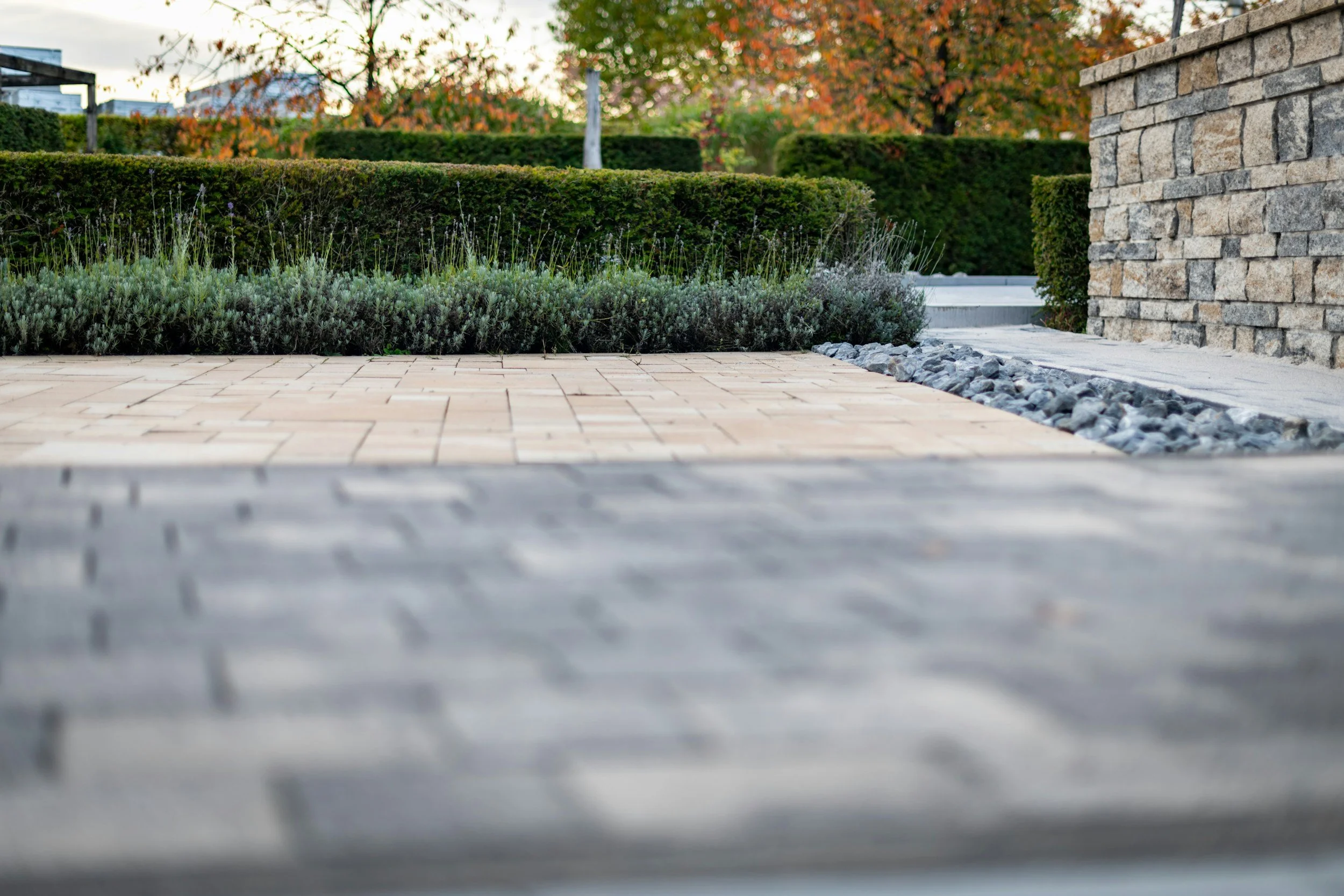
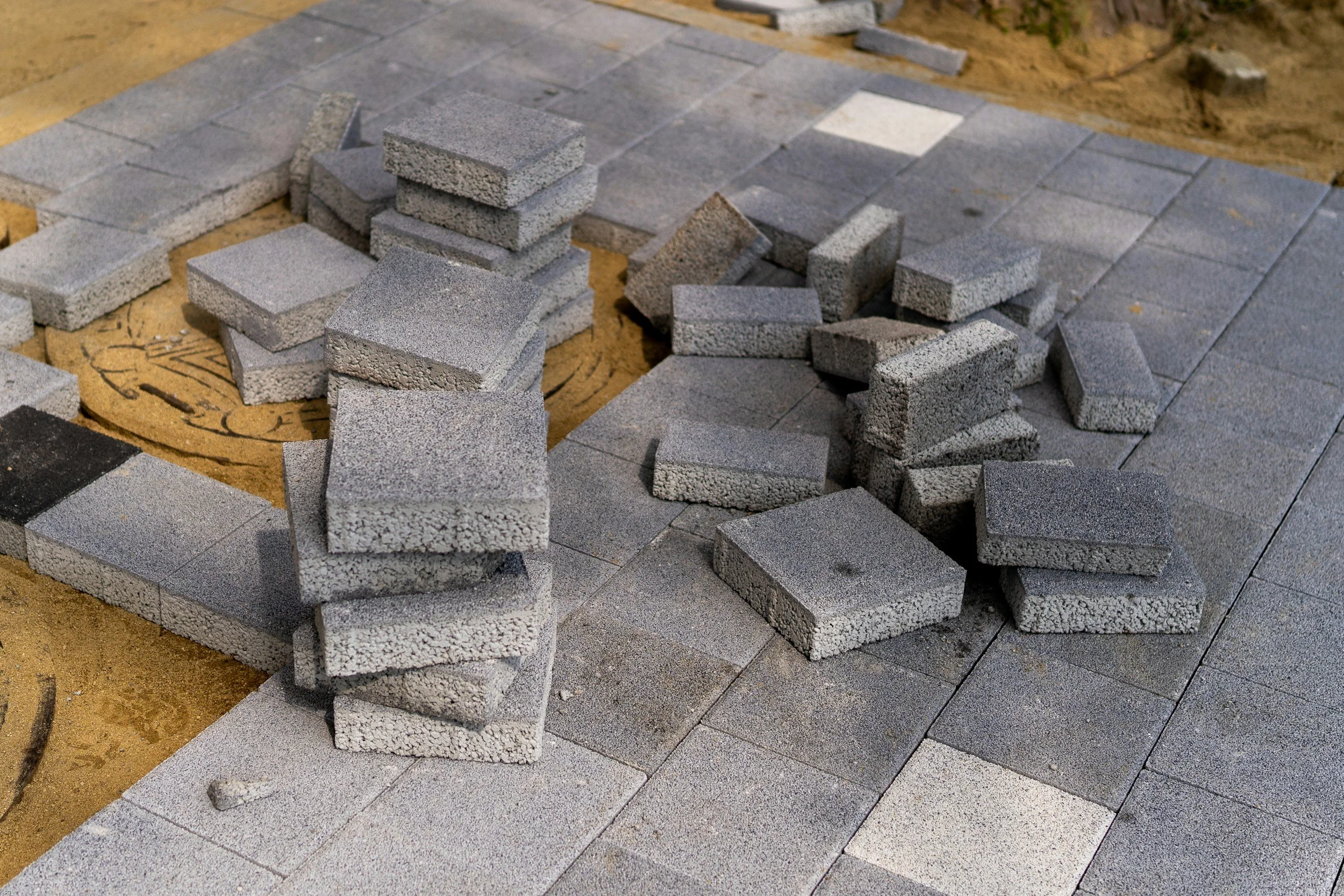
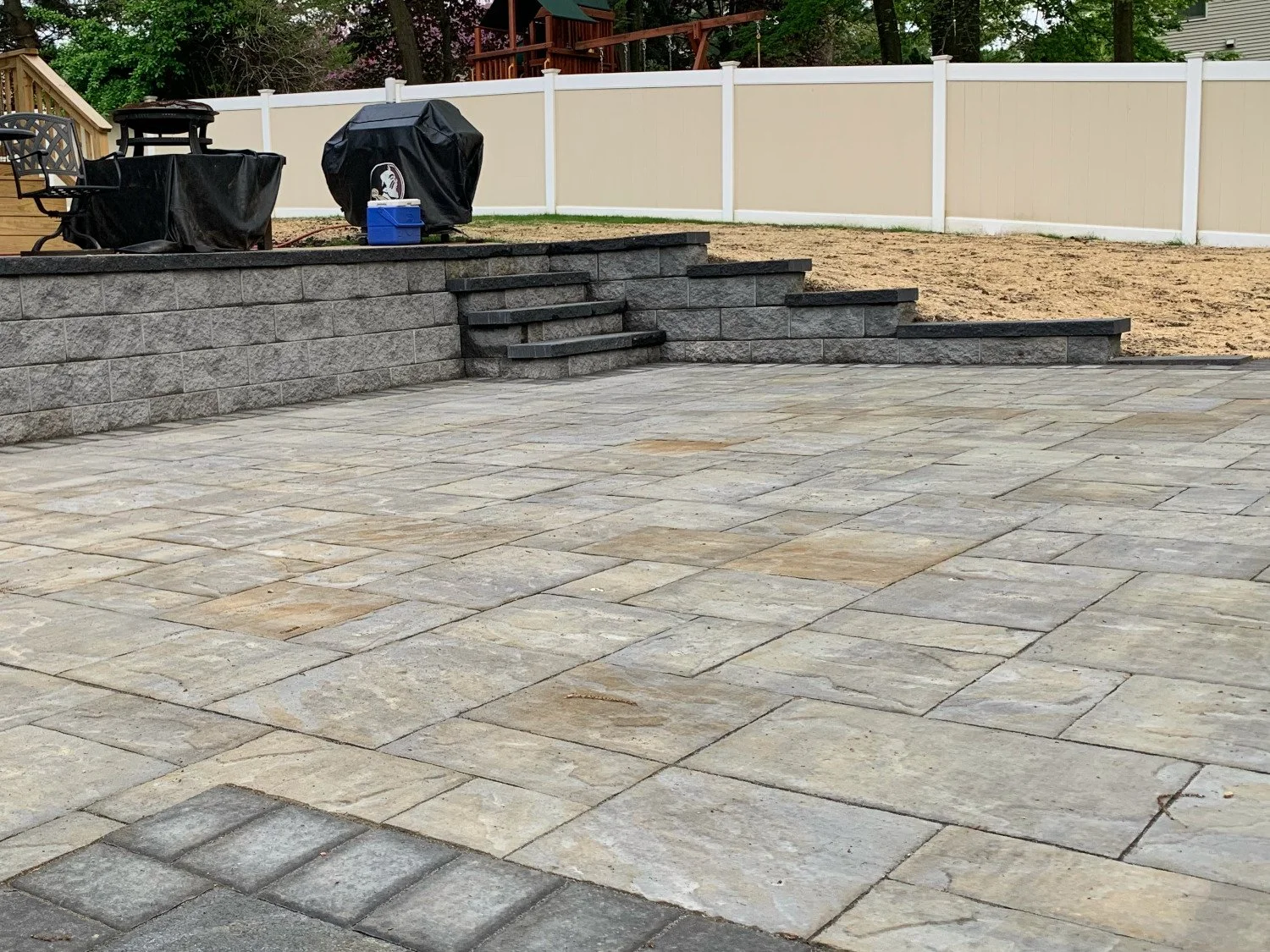
Patios, walkways, driveways, walls, and steps built by MDK.



From the call to the walkthrough
It starts with a phone call and a visit from Mark to see the property. A written proposal follows, listing the work, the materials, and the price. Once signed, the job is scheduled and built, and Mark walks the finished work with the homeowner. Details are on the pavers and hardscaping page.
Orangeburg homeowners on MDK
The owner is on the job

Mark owns MDK and has run it since 2007. He comes out to every property himself before pricing a job, handles the billing, and works on the job sites alongside his own crew. MDK does not hand its work to subcontractors, so the people who show up are the people Mark hired.
More paver pages
Orangeburg is one stop on a larger map. MDK works throughout Rockland County.
Paver patios in
New City
Paver patios in
Valley Cottage
Paver patios in
Nanuet
Common paver questions in Orangeburg
-
Orangetown lists retaining walls among the projects that require a building permit. The permit belongs in the plan and the schedule from the beginning, so the wall is not held up once the job starts.
-
No. Each town in Rockland writes and enforces its own building rules. Orangeburg falls under the Town of Orangetown, so Orangetown's building office is the one that decides what a project needs.
-
Yes, and doing them together is usually the better plan. The walk and the steps can be laid out to match, and the landing at the door can be built deep enough to stand on while opening a storm door, which many original entries are not.
-
It is not patched. The slab comes out, the soft soil underneath is dug down to firm ground, and a new compacted base goes in before the pavers. Patching or overlaying the old slab leaves the cause of the sinking in place.
-
If the driveway connects to an Orangetown road, the town requires a written permit and an on-site meeting on grades and drainage before the connection is built. Setting that meeting early keeps the rest of the job from waiting on it.
-
Poured concrete usually costs less up front. Pavers handle freeze and thaw better because the individual units flex slightly with the ground instead of cracking as one slab. When something does go wrong, a section of pavers can be lifted, the base fixed, and the same pavers relaid. A cracked slab has to be cut out and patched, and the patch rarely matches.
-
Pavers do not have to be sealed. Some homeowners seal them to deepen the color or resist stains. Normal care is sweeping, rinsing, topping up joint sand every few years, and pulling any weeds that take root in the joints.
Call Mark to talk through the project and set up a site visit. Estimates are free. To write it out instead, use the estimate form.
Plan a patio, walkway, or wall with MDK
What to expect:
•A free on-site visit to look at your property and talk through what you want
•A written, itemized proposal with the price before any work starts
•A licensed and insured crew, and materials named on the proposal